

Issue #07: What Real Estate Pros Can Learn from Crisis PR
“The time to fix the roof isn’t when the hurricane hits.” — Every good publicist, ever.

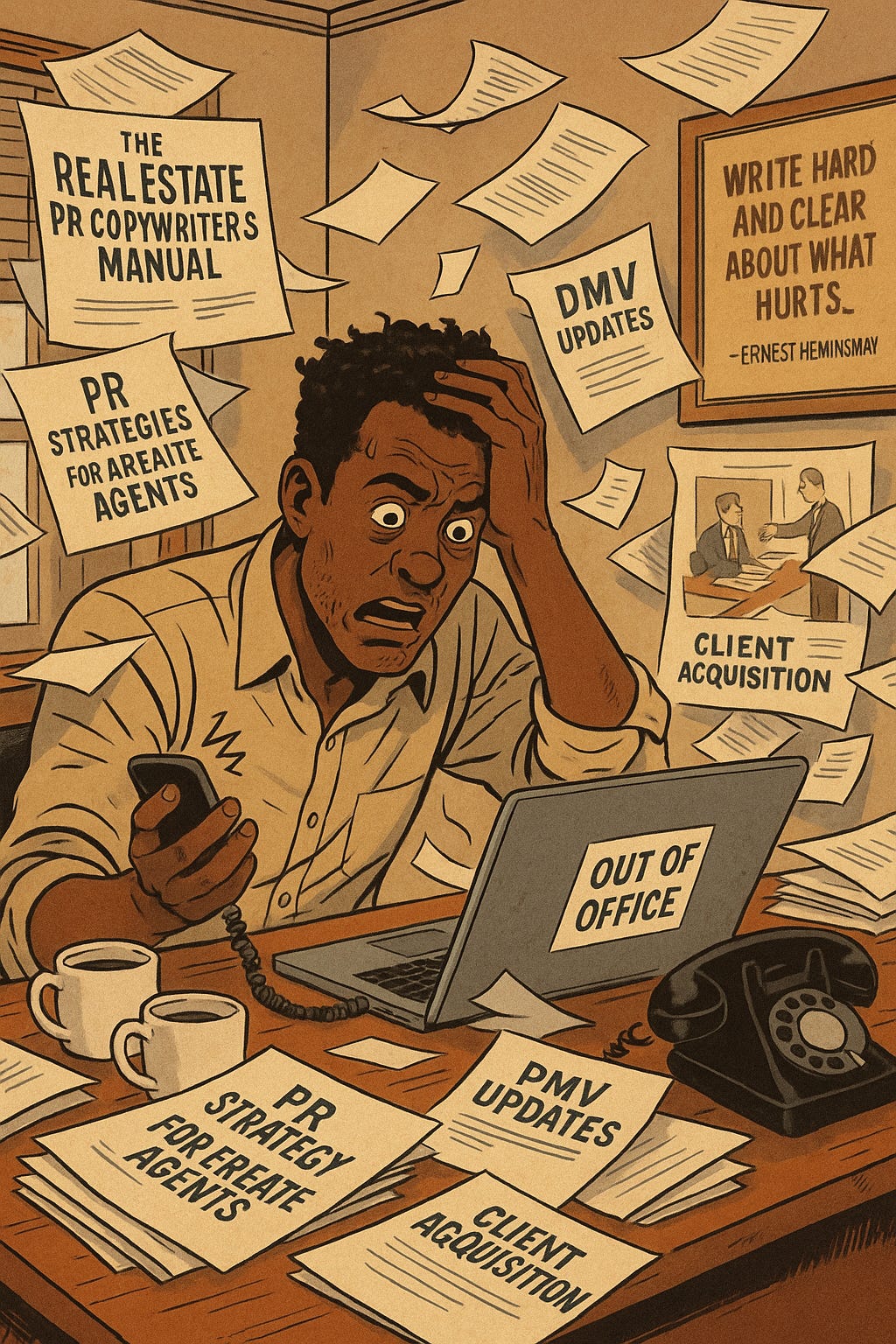
I’ve worked crisis PR.
I’ve drafted statements under fire.
I’ve sat in rooms while reputations burned.
And here’s what I know for certain:
Most real estate professionals are one bad listing, one viral complaint, or one market shift away from a visibility crisis.
But almost none of them are prepared.
First, what is crisis PR?
Crisis PR isn’t spin. It’s strategy under pressure.
It’s what kicks in when:
The media’s calling and you don’t have answers
Your message is unclear, outdated, or worse — off-brand
Public trust drops before your listing price does
In other words:
It’s what keeps brands from collapsing when the unexpected happens.
Why should agents care?
Because in real estate, your reputation is your inventory.
Your name, your trustworthiness, your visibility — that’s what sells long before a lockbox gets installed.
And if you’re only showing up when things are perfect, you’re missing the bigger play.
Let me give you some examples.
Real-World Crisis Triggers (You’ve Probably Seen These):
A deal falls apart and the client blasts the agent online
A competitor starts targeting your past clients with “better service”
A luxury listing gets pulled, and the seller posts about it on Facebook
The local market crashes, and buyers suddenly ghost
These aren’t hypotheticals. They’re reputational turning points — whether you treat them like it or not.
3 Lessons from Crisis PR Every Agent Should Apply
1. Have a holding statement ready before you ever need one.
In PR, we call it a standby statement — a short, empathetic, non-reactive response you can customize fast.
Real estate version:
“Thanks for reaching out — I understand how important [X issue] is to you. I’m actively looking into it and will share a clear update shortly.”
No dodging. No panic. Just presence.
2. Control your narrative — or someone else will.
When a deal goes sideways, when the market shifts, when a headline misrepresents your industry — silence is not neutral. It’s dangerous.
Use your platforms (email, Facebook, BlueSky, Substack, LinkedIn, Instagram) to:
Share your values
Explain your process
Reinforce your standards
Visibility = Stability.
3. Don’t build trust when it’s too late.
The agents who handle tough moments well… are the ones who earned trust before the storm.
Here’s how:
Publish helpful content consistently
Show behind-the-scenes transparency
Speak like a human, not a brand
You don’t need 10,000 followers.
You need 10 people who’d vouch for you when things go dark.
A Real-Life Example from My PR Days
Years ago, I worked with a nonprofit that got slammed in the media. Donor confidence was cratering.
But because we’d consistently published impact stories and kept open channels with the press, we weren’t silenced — we were heard.
We owned our response. We clarified our position. We earned respect, not backlash.
That principle? It applies whether you're saving lives or selling houses.
Action Steps for Real Estate Pros
Build your "calm in the storm" kit:
A basic statement template
Your brand values, written down
A crisis FAQ (even if it’s just for yourself)
Show up consistently when things are not on fire:
Send a monthly Newsletter or email
Share behind-the-scenes content weekly
Invite questions before problems arise
Ask yourself:
If my name showed up in the news tomorrow, would I feel confident — or cornered?
Want Help Creating Your Messaging Playbook?
If you’re serious about building a resilient brand — one that doesn’t crumble under pressure — let’s talk.
I’m offering a few free 15-minute sessions to agents who want to build their own Visibility + Trust Toolkit.
Book here.
Or reply with: “Let’s build my playbook.”
— Delroy A. Whyte-Hall
Real Estate PR Copywriter
whcomn@gmail.com
www.whytehallcommunications.com