

When the White Knight Becomes the Dragon
How stories flip, and what to do when your own story turns on you.

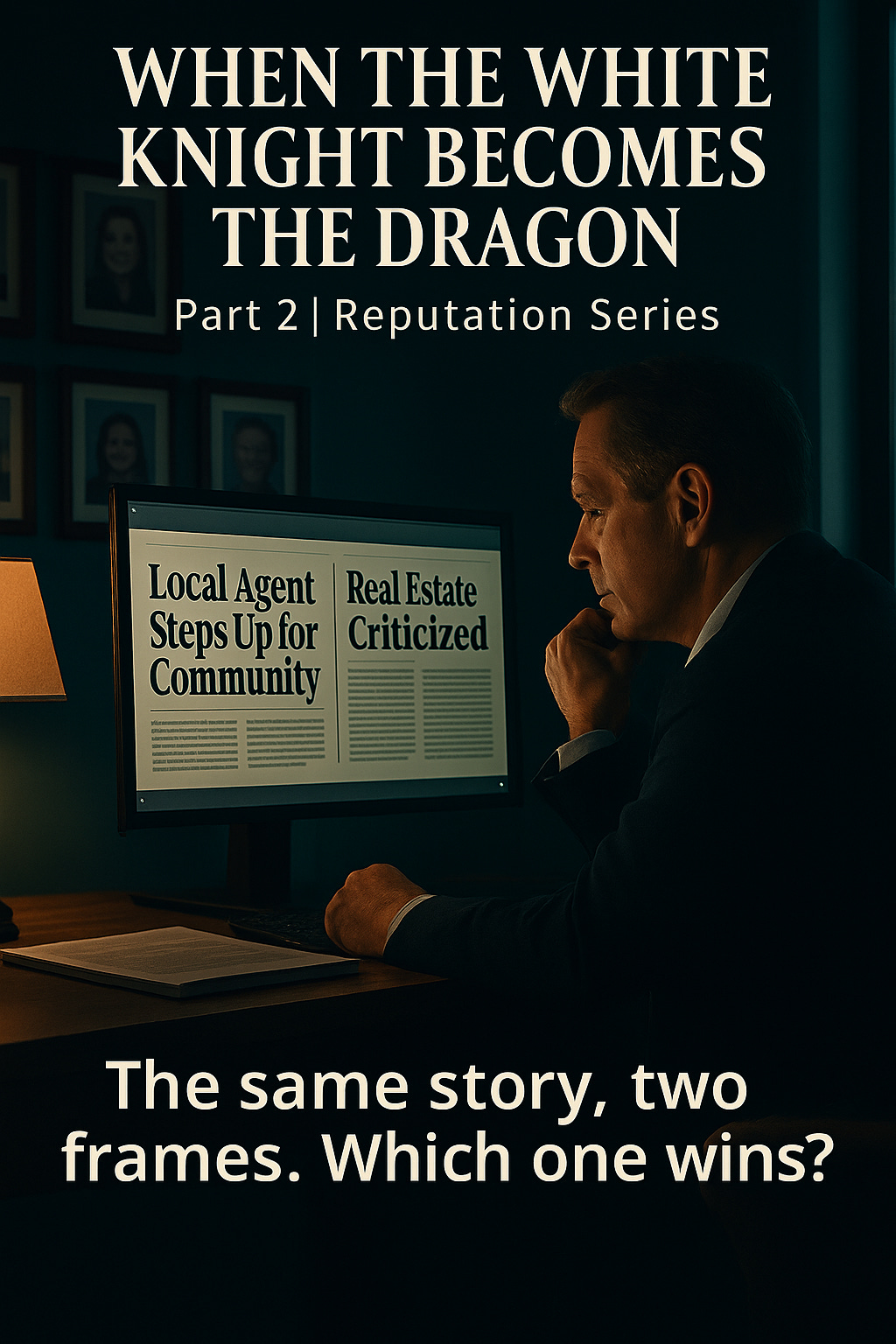
Welcome to this month’s Off-Market Influence 4-Part Series.
Every month, we unpack one reputation-defining idea across four narrative issues — exploring visibility, storytelling, and emotional trust under real-world pressure.
This month’s theme:
“When the Weather Turns — What Reputation Really Means.”
We’re exploring:
How fragile visibility really is
How fast stories get flipped
What real integrity costs
And how to rebuild when the damage is done
Recap of Part 1: The Weather Test
Last week, we opened the series with a question:
What if your reputation didn’t fail — it just faded?
We unpacked the idea that trust is weather-dependent — less about what you do, more about when and how people see it. And we looked at how visibility, consistency, and timing create a kind of reputation shelter.
But what if someone storms in and rewrites the story entirely?
That brings us to Part 2.
When the White Knight Becomes the Dragon
There’s a scene in Nothing But the Truth (2008) — retitled on YouTube as Undercover Justice: The Agent Who Risks Everything to Expose the Truth — that’s stayed with me.
Defense attorney Albert Burnside turns to Rachel Armstrong and quietly says:
“Somewhere along the line, the press stopped being the white knight… and became the dragon.”
He’s talking about how quickly public sentiment can flip.
From hero to headline.
From principled to problematic.
This isn’t just about media.
This is about perception.
And the fact that you don’t own your reputation until you defend its story.
How Stories Flip — Even the True Ones
In visibility-driven industries like real estate, PR, or consulting, reputation is shaped by narrative momentum — and that momentum can reverse with zero warning.
It usually follows four stages:
Build-Up
You do good work. Visibility rises.Echo
People retell your story. Often accurately — at first.Twist
Someone reframes it — out of context, with assumptions, or for attention.Freeze
You hesitate. The narrative hardens before you respond.
By the time you’re ready, you’re not controlling your message — you’re cleaning up someone else’s.
What It Looks Like in Real Life
Your big listing goes stale — and whispers begin: “They overpriced it.”
Your deal falls through — and someone assumes you botched it.
You miss one update email — and the client assumes you’re hiding.
None of this is rooted in truth.
It’s rooted in unfilled silence — and whoever speaks first usually frames the story.
How to Stay in Control of the Frame
You don’t need to panic.
You need to frame before someone else does.
Here’s how:
Pre-empt Misreadings
Explain your decisions before others guess.Document Your Work
Screenshots. Reviews. Data. Testimonials. These are story anchors.Stay Present
A quiet social feed, newsletter, or brand lets rumors fill the silence.Practice the Pivot
Own the facts. Reframe with humility. Speak like a human, not a spin doctor.
As I tell clients: The first story told is the one believed the longest.
Seasonal Context: Mid-November
Right now, we’re in the narrative pressure-cooker.
Year-end gossip. Budget cuts. Market shifts.
You’ll hear questions like:
“What happened with that big client?”
“Are you still doing listings?”
“I thought you were…?”
This isn’t the time to go quiet.
This is the time to step in and steer the conversation.
The full breakdown — reserved for paid subscribers — continues inside the Vault edition. (Keep reading for a case study and the full Crisis Story Map template.)
🔒 VAULT EDITION (Paid Section)
✅ Case Study — The Listing That Turned Tabloid
A D.C. agent I consulted with listed a luxury home that drew attention for its pricing.
Local media loved the aesthetic — until it didn’t sell.
A real estate gossip blog published a snarky article calling it “the listing no one wants.”
Instead of fighting it, she reframed.
She reached out to a journalist with market insights and pitched a bigger story: How luxury buyer behavior shifted post-pandemic.
The follow-up article turned the narrative around.
Three new sellers reached out that same week — impressed by her poise.
Lesson: Reputational damage isn’t always avoided.
But it can always be redirected — if you act quickly.
✅ Framework — The Crisis Story Map
Use this simple template to prepare for the moment your story turns sideways:
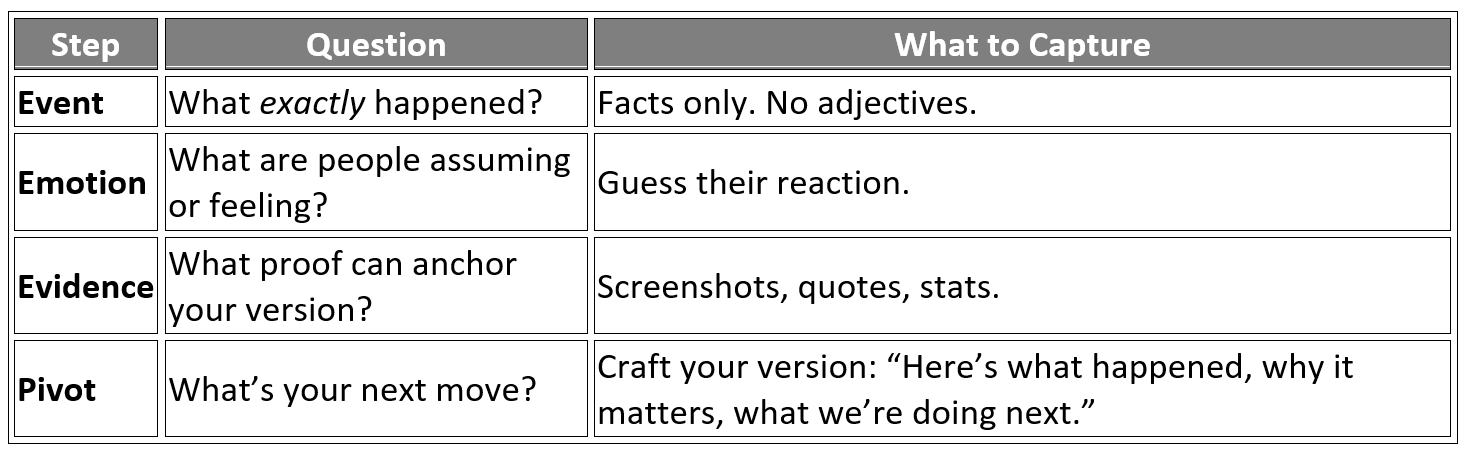
Pro tip: Always time-stamp your version of the story. Clarity + speed = trust.
Vault members: download the full Crisis Story Map Template to use in upcoming campaigns, team coaching, or client fire-drills.
Closing Reflection
You don’t have to fear the public turning.
But you do have to prepare for it.
Your reputation is built in calm seasons — and revealed when the air shifts.
Tell the story before someone else tells it for you.
Coming Next Week — Part 3: The Principle Tax
We’ll explore what real integrity actually costs — and why it’s still worth paying.
If Part 2 was about narrative defense, Part 3 is about emotional and financial sacrifice — and how professionals build long-term trust by choosing right, not easy.
See you Tuesday,
Delroy